
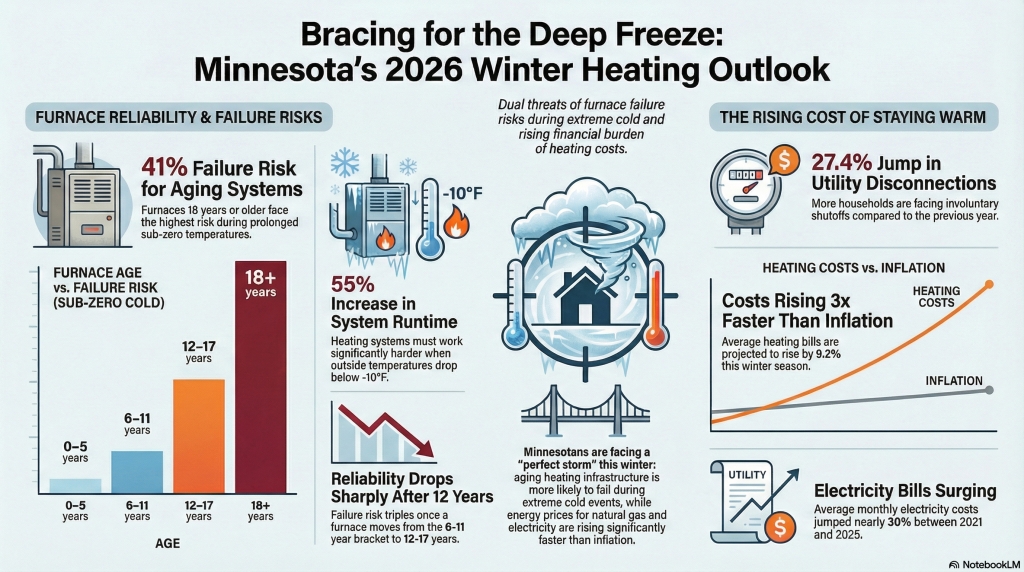
Today’s furnaces pack smart technology and better parts that last longer than older models. Regular furnace maintenance keeps your heating system running smoothly, while skipped tune-ups can cut your furnace lifespan in half.
Download The Report

What features make a furnace reliable in 2026?
Modern furnaces pack smart features that keep Minneapolis homes warm all winter. These systems work harder and last longer than older models.
- Modulating gas valves control heat output precisely. These valves adjust flame size based on your home’s heating needs. Gas furnaces with modulating valves prevent temperature swings and reduce energy consumption.
- Variable-speed blowers move air efficiently through your home. The blower motor runs at different speeds to match heating demands. This feature cuts heating bills and improves comfort levels.
- High-efficiency systems achieve 98-99% AFUE ratings. These units convert almost all natural gas into heat for your home. Energy Star certified models work best in Minnesota’s cold climate.
- Smart thermostats learn your heating patterns. These devices adjust temperatures automatically when you’re away. They connect to your smartphone for remote control and energy savings.
- Advanced diagnostics catch problems early. Artificial Intelligence monitors system performance around the clock. The technology alerts you before small issues become expensive furnace repairs.
- Quality air filters protect internal components. Clean filters keep dust and debris out of the heat exchanger. Regular filter changes extend furnace lifespan and maintain efficiency ratings.
- Sealed combustion systems draw air from outside. This design prevents backdrafting and improves safety in basements. The feature also boosts energy efficiency in well-insulated homes.
- Stainless steel heat exchangers resist corrosion. These components handle Minnesota’s temperature extremes better than standard materials. They last longer and maintain heating performance over time.
How does maintenance affect furnace performance over time?
While advanced features create reliable furnaces, routine maintenance keeps these systems running at peak performance. Regular upkeep directly impacts how well your heating system works over the years.
Consistent maintenance preserves the efficiency of high-efficiency furnaces that operate at 98-99% AFUE ratings. Your gas valve, blower motor, and other components need regular attention to maintain optimal function.
Air filters require frequent changes to prevent system strain. Technician expertise remains crucial for effective service, even with new AI diagnostics helping identify problems early.
Proper maintenance helps control rising heating costs, which experts project will increase by 14% in the Midwest. Regular service visits can help you avoid the anticipated $1,000 to $1,200 increase in HVAC system costs.
Your furnace lifespan extends significantly with proper care. Systems with modulating gas valves and variable-speed blowers especially benefit from professional attention. This consistent care minimizes emergency furnace repair risks and keeps your heating bills manageable throughout the system’s life.
Furnace Costs in Minneapolis
Buying a new furnace in Minneapolis feels like sticker shock at first glance. Most homeowners pay between $3,500 and $8,000 for furnace replacement, but your final bill depends on several moving parts that can make or break your budget.
What are the typical installation and replacement costs for furnaces?
Minneapolis furnace costs vary widely based on your heating system needs and home setup.
| Installation Type | Cost Range | What’s Included |
|---|---|---|
| Standard Furnace Replacement | $2,819 – $6,879 | Basic unit swap, standard labor |
| New Furnace with Installation | $4,700 – $4,900 | Unit cost plus labor charges |
| Complete HVAC System | $10,000 – $17,000 | Furnace, AC unit, full installation |
| Premium HVAC Replacement | $10,000+ | High-end units, complex installations |
| Minor Furnace Repairs | $150 – $350 | Small fixes, basic maintenance |
| Major Furnace Repairs | $2,000+ | Significant component replacement |
Standard furnace replacements in Minneapolis fall between $2,819 and $6,879 for most homes. This price covers basic installation work without major modifications. Labor costs make up a big chunk of your total bill.
Full HVAC system replacements can exceed $10,000 due to higher labor and material costs. These projects include both heating and cooling components. Complex installations push prices toward the $17,000 mark.
Most homeowners pay around $4,700 to $4,900 for new furnace installation including labor. This middle-ground option covers quality units with professional setup. Material costs fluctuate based on furnace efficiency ratings.
Minor furnace repairs cost between $150 and $350 for simple fixes. These repairs handle basic maintenance issues quickly. Significant repairs can exceed $2,000 when major components fail.
Installation complexity drives price differences across Minneapolis homes. Older homes often need extra work for proper furnace fitting. Modern homes typically see lower installation costs due to updated infrastructure.
Which factors influence furnace pricing trends in Minneapolis?
Several key factors drive furnace pricing trends in Minneapolis beyond just the basic installation costs. Unit efficiency ratings play a major role, with high-efficiency furnaces carrying 98-99% AFUE ratings commanding premium prices despite their higher upfront investment.
Labor costs fluctuate based on contractor availability and seasonal demand, especially during peak heating season when everyone scrambles for repairs. Natural gas prices from Xcel Energy directly impact operating expenses, making energy-efficient HVAC systems more attractive to homeowners looking to cut heating bills.
Ductwork modifications can add thousands to your project budget, particularly in older homes with outdated air ducts or poor insulation levels. The global supply chain continues to affect material costs, while inflation pushes both equipment and labor expenses higher.
Federal tax credits for energy-saving equipment help offset some costs, but the projected 14% increase in heating costs for winter 2026 makes efficiency ratings even more critical.
Crawlspace conditions, attic insulation quality, and existing ventilation systems all influence the final price tag, as contractors must account for these variables when sizing heating and cooling systems properly.
How do efficiency ratings impact furnace operation and costs?
Efficiency ratings directly control how much money you spend on heating bills each month. High-efficiency furnaces with 98-99% AFUE ratings cost more upfront, but they slash your natural gas prices over time.
Think of it like buying a car that gets great gas mileage. You pay extra at the dealer, but save at the pump every week. These advanced systems use modulating gas valves and variable-speed blowers to squeeze every British thermal unit from your fuel.
Regular folks see the difference when Xcel Energy sends their monthly bill.
The projected 14% increase in heating costs for winter 2026 makes efficiency ratings even more important. Your old furnace might burn through cash like a bonfire burns wood. Modern units with top efficiency ratings help you weather these price spikes better.
Smart homeowners pair these systems with proper attic insulation and clean air filters to maximize savings. The math is simple: better efficiency ratings mean lower heating loads and smaller monthly payments, even when energy demand peaks during brutal Minneapolis winters.
Conclusion
Your heating system deserves smart choices, not rushed decisions. Minneapolis homeowners face rising costs and harsh winters, making furnace reliability crucial for comfort and savings.
High-efficiency gas furnaces with modulating systems offer the best value over time, even with higher upfront costs. Regular furnace maintenance keeps your heating bills manageable and prevents costly emergency repairs during those brutal February nights.
Smart planning today means warm homes and happy wallets tomorrow.
FAQs
1. What makes a high-efficiency furnace worth the cost in Minneapolis?
High-efficiency furnaces cut your heating bills by using less natural gas. They work better in cold weather and last longer than older models. Xcel Energy offers rebates that help lower the upfront furnace replacement cost.
2. How long should my gas furnace last before I need furnace repair or replacement?
Most gas furnaces run well for 15 to 20 years with good furnace maintenance. Your furnace lifespan depends on how often you change air filters and get tune-ups.
3. Are heat pumps reliable in Minneapolis winters, or should I stick with my gas furnace?
Air source heat pumps work fine until temps drop below zero. Many folks pair them with backup heating for the coldest days. Gas furnaces still beat heat pumps when Jack Frost really bites.
4. What furnace maintenance keeps my heating bills low and prevents costly repairs?
Change your air filters every month during winter. Get yearly tune-ups to check your blower motor and gas valve. Clean air ducts and seal gaps around doors with weather-stripping.
5. How can I boost energy efficiency without replacing my whole heating system?
Start with an energy audit to find where heat escapes. Add attic insulation and check insulation levels in your basement. Upgrade your water heater and seal air leaks around windows.
6. What heating costs should I expect with natural gas prices rising in 2026?
Natural gas prices keep climbing, but gas furnaces still cost less to run than electric furnace models. Peak load times during cold snaps drive up electricity costs. Smart folks lock in rates early or switch to renewable energy when possible.


